

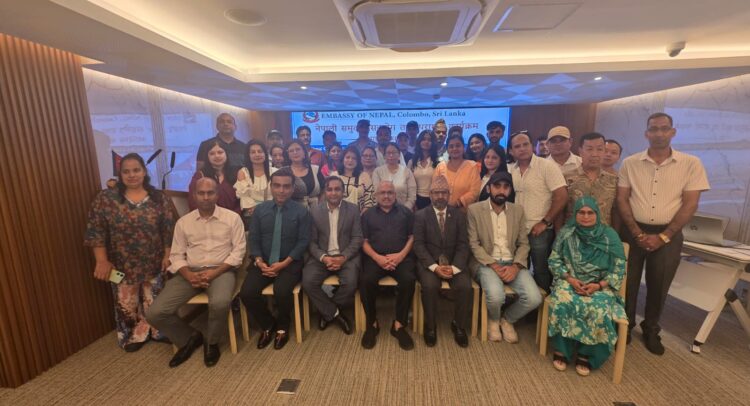
The Embassy of Nepal in Colombo, Sri Lanka, organized the ‘Nepal Community Support, Health Check, and Consular Service Camp–2026’ at Kamana Maalam in Male, the capital of Maldives. The program aimed to address the grievances and provide medical assistance to Nepalese migrant workers currently employed in the Maldives.
Appreciation of Contribution and Key Advice
The Chief Guest of the program, former Vice President of Maldives Abdulla Jihad, highly praised the hard work and integrity of the Nepalese community. He also shared valuable suggestions regarding remittance management and secure methods for sending earnings back to Nepal.
Vijay Kumar Raut, Deputy Chief of Mission at the Embassy, highlighted the significant role of Nepalese citizens in the development of the Maldives. He stated that the contributions of Nepalese workers in health, construction, tourism, and economic sectors are incomparable. Furthermore, he provided detailed information regarding the consular services and support offered by the Embassy.
Recognition and Discussion on Labor Issues
On this occasion, the Embassy expressed its gratitude and appreciation to Nepal Helpline for its vital role in rescuing Nepalese workers in distress, providing legal counseling, and coordinating with the mission.
The event saw participation from representatives of various organizations, including Aasiya Mohammad, President of Nepal Helpline, and General Secretary Saroj Sapkota. The sessions focused on several critical issues faced by Nepalese workers, such as:
Confiscation of passports and breach of labor contracts.
Wage disputes and labor exploitation.
Physical and mental health challenges.
Health Camp and Impact
During the health camp, more than 150 Nepalese individuals received free health screenings, including eye check-ups, conducted with the technical support of Nepal Netra Jyoti Sangh and various healthcare professionals.
It is believed that such initiatives will serve as a milestone in resolving the problems of Nepalese living abroad and ensuring they feel the supportive presence of their state.

